Stealth (Head of Operations, 2025 to present)
First full-time employee at a Series A stealth climate company. More to share when we launch.
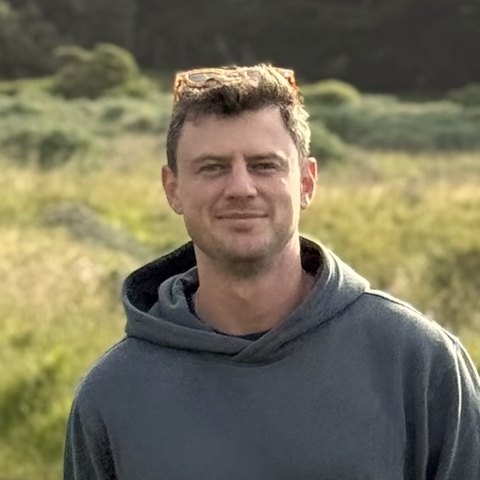
Engineer and Founder
Now: (Stealth, Series A) Building scalable climate infrastructure
Past: Co-founder, CEO of Callus Cultures (Y Combinator S22)
Research: Nanobiomaterial Engineering at Berkeley Lab, DARPA
Where: San Francisco
First full-time employee at a Series A stealth climate company. More to share when we launch.
Developed bio-based polymer inclusion membranes for selective purification of rare earth elements, the metals in the battery energy and semiconductor supply chains. The membranes use genetically engineered, lanthanide-binding proteins as carriers. Optimized protein expression and designed crosslinking chemistry that made the membranes structurally stable while maintaining active-site function. Fabricated the membranes, built custom Arduino-based automated test rigs, and developed parameterized models of lanthanide separation and flux. The performance of the lanthanide-binding protein materials led to a focused techno-economic analysis and a proposed spinout.
Founded a company growing plant cells in bioreactors to make molecules (drugs, food ingredients, cosmetic compounds) that yeast and bacteria cannot make. Many of these molecules have complex structures, built by plant enzymes that need modifications microbes lack. Ran the genetic engineering program and built models showing almond milk from cells could be profitable at small scale on about 90% less water. Completed Y Combinator (S22) and raised the first round.
Supported concept de-risking and early incubation of a healthcare company. The concept uses new genetic tools and actionable biological data to make care delivery more efficient and align payers, providers, and patients.
Supported the founder in the early stages of the project that became Vayu. Vayu improves care for Medicaid patients with diabetes by aligning financial incentives to the medical interventions that have the highest impact on health outcomes. A published pilot showed better glucose control for enrolled patients.
Led education program and curriculum development, including the design and pilot of a new training format. Enrollment tripled in nine months, and the organization adopted the new format.
Loop is an open-source app that links a continuous glucose monitor (CGM) and an insulin pump to automate insulin delivery for type 1 diabetes. Users build it themselves from the source code. As an early user, volunteered to help new users build and set up their systems. Labeled my own CGM and pump data and developed a signal-processing classifier that separates missed meal boluses from shifts in insulin sensitivity. Running it as an alert in my own system lowered my A1C by about 0.5 points (clinically significant reduction).
Open-source machine-learning models for materials could speed industrial engineering and new materials development, but their accuracy on specific applications is often untested. Applying training in computational chemistry and lab experience to learn how fundamental model development connects to specific applications and where its limits are. The first case is iron-air batteries, which could store renewable power for days but lose energy to hydrogen forming at the iron electrode. Iron is magnetic, so accurate simulations of its surface need costly spin-polarized quantum calculations (DFT), which large training sets often leave out. Working on fine-tuning the models with targeted spin-polarized data and validating them for screening additives that suppress hydrogen.
New physics-based subsurface models can find carbon storage sites and oil reserves more cheaply and accurately, but the labeled data they need is scarce. Conventional surveys use crews to place sensors by hand, and a typical onshore survey can cost more than $20 million. Oil companies have piloted drone-dropped sensors, and better MEMS-based geophones and low-cost drones could make dense data collection affordable. Exploring whether swarms of lightweight drones can collect higher-quality multimodal data to train a new class of subsurface foundation models. Identified the key technical risks and built early proofs of concept. Now improving those proofs of concept with input from industry advisors.